Trusted for 26+ Years

Dr. Lisa Lawless, CEO of Holistic Wisdom
Clinical Psychotherapist: Relationship & Sexual Health Expert

All women and men should have control over if and when they become parents. Birth control is essential for personal life choices, but it also helps society decrease crime. As unwanted children grow up without proper guidance and support, they contribute to documented increases in criminality later in life. Making decisions about birth control or contraception is not easy; there are many things to think about. Learning about birth control methods you or your partner can use to prevent pregnancy and talking with your health care provider are two good ways to get started.
There is no ideal method of birth control. Each method has its pros and cons. Some methods work better than others at preventing pregnancy. Researchers are always working to develop or improve birth control methods.
The birth control method you choose should take into account:
There are many methods of birth control that a woman can use. Talk with your health care provider to help you figure out what method is best for you. You can always try one method, and if you do not like it, you can try another.
Keep in mind that most birth control does NOT protect you from HIV or other sexually transmitted diseases (STDs) like gonorrhea, herpes, and chlamydia. Other than not having sex, the best protection against STDs and HIV is the male latex condom. The female condom may give some STD protection. Other birth control methods involving a spermicide (a cream or jelly that kills sperm) may also provide some protection against chlamydia and gonorrhea.
Don't forget that all of the methods work best if used correctly, so be sure you know the correct way to use them. Talk with your health care provider and don't feel embarrassed about talking with her or him again if you forget or don't understand.
Know that learning how to use some birth control methods can take time and practice. Sometimes health care providers do not explain how to use a method because they may think you already know how. For example, some people do not know that you can put on a male condom inside out. Also, not everyone knows that you need to leave a reservoir (space) at the condom's tip for the sperm and fluid when a man ejaculates or has an orgasm.
The more you know about the correct way to use birth control, the more control you will have over deciding if and when you want to become pregnant.
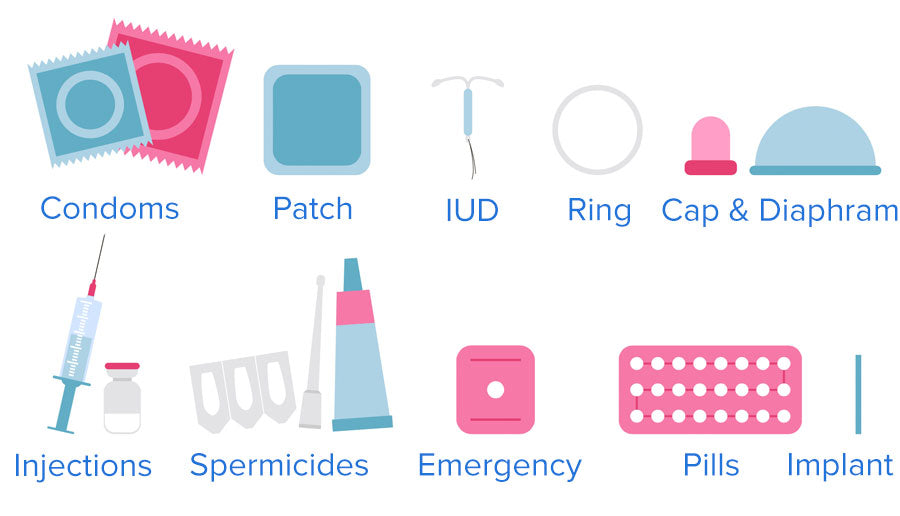 Below is a list of birth control methods with estimates of effectiveness in preventing pregnancy when used correctly:
This means not having sexual intercourse at any time. It is the only sure way to prevent pregnancy. This method is 100% effective at preventing pregnancy. A woman who has a regular menstrual cycle has about nine or more fertile days, or days when she can get pregnant, each month. Periodic abstinence means you do not have sex on the days that you may be fertile. Fertility awareness means that you can be abstinent or have sex, but you use a "barrier" method of birth control to keep sperm from getting to the egg. Barrier methods include condoms, diaphragms, or cervical caps, used together with spermicides, which kill sperm. These methods are 75 to 99% effective at preventing pregnancy.
Remember that you need to learn about your menstrual cycle (or how often you get your period). You keep a written record of when you get your period, what it is like (heavy or light blood flow), and how you feel (sore breasts, cramps). You also check your cervical mucus, take your basal body temperature daily, and record them in a chart. This is how you learn to predict or tell which days you are fertile. You can ask your doctor for more information on how to record and understand this information.
Condoms are called barrier birth control methods because they put up a barrier, which keeps the sperm from reaching the egg. Only latex, polyisoprene or polyurethane condoms are proven to help protect against STDs, including HIV. Natural or lambskin condoms made from animal products also are available. But lambskin condoms are not recommended for STD prevention because they have tiny pores that may allow for the passage of viruses like HIV, hepatitis B, and herpes. Male condoms are 86 to 98% effective at preventing pregnancy.
Condoms can only be used once. You can buy them at a drugstore. Condoms come lubricated (which can make sexual intercourse more comfortable and pleasurable) and non-lubricated (which can also be used for oral sex). It is best to use lubrication with non-lubricated condoms if you use them for vaginal or anal sex. You can use most water-based lubricants, but avoid oil-based lubricants like massage oils, baby oil, lotions, or petroleum jelly will weaken the condom, causing it to tear or break. Always keep condoms in a cool, dry place. If you keep them in a hot place (like a billfold, wallet, or glove compartment), the latex breaks down, possibly causing the condom to tear or break. If you are allergic to latex, there are condoms made of polyurethane that you can use. For more information, please see our helpful guide: Spermicide & Latex Allergies.
Some water-based and hybrid lubricant brands are only compatible with natural rubber latex and polyisoprene condoms and are not compatible with polyurethane condoms. Make sure to check with each brand to determine if they are compatible before using.

It is vital to use a condom correctly and consistently, which means every time you have vaginal, oral, or anal sex. If you do not know how to use a condom, talk with your healthcare provider. Don't be embarrassed. Also, do not assume that your partner knows how to use a condom correctly. Many men have never had anyone show them how. The most significant reason condoms fail is due to incorrect use.
Oral contraceptives contain combinations of synthetic female hormones forms of estrogen and progestogen that help prevent pregnancy and are taken following a prescribed monthly schedule.
Oral contraceptives work by suppressing a woman's secretion of certain hormones connected with the onset of ovulation (egg release) and menstruation. This "fools" the body into thinking the woman is pregnant and essentially blocks further ovulation and menstruation cycles. With those cycles blocked, the woman is far less likely to become pregnant.
Important to remember when taking oral contraceptives:
Benefits
Ortho-tri-clyclen and Ortho Tri-Cyclen Lo contains a combination of hormones: estrogen and the progestin norgestimate, developed by Ortho-McNeil Pharmaceutical, Inc. Taking birth control pills (the pill) is simple, safe, and convenient. Many women who take the pill have more regular, lighter, and shorter periods.
The pill does not interfere with having sex. Many women say the pill has improved their sex lives. They say they are free to be more spontaneous and do not have to worry about becoming pregnant. The pill offers many health benefits, including some protection against:
Infection of the fallopian tubes (pelvic inflammatory disease), which often leads to infertility
Protection against developing cancer of the ovary or the uterus (endometrium) can last up to 15 years after stopping the pill. Protection against endometrial cancer increases with each year of use women who use the pill for eight years reduces their risk of getting endometrial cancer by up to 80 percent.
Risks
Like other oral contraceptives, Ortho Tri-Cyclen Lo is highly effective when taken correctly; however, there are health risks, and it may be a contributor to cervical and breast cancer. There are conflicting reports about breast cancer and birth control pills. It is crucial when looking at studies to follow the money and determine who is funding the research and what is invested in the outcome.
A pharmaceutical company that makes birth control pills with studies that show them to be extremely safe has financial motivation for those studies to deliver positive outcomes. That is not to say the studies are false, but studies can be presented in very manipulative ways.
For example, a study showed that 1 in 4 men under 40 years of age had erectile dysfunction. However, when you look more closely, the study was funded by those who would financially benefit from Viagra sales. It did not weed out men who were experiencing erectile dysfunction and claiming to have issues, so their doctor would prescribe Viagra. They could try it for recreational use. Therefore, to say based on this that 1 in 4 men have erectile dysfunction is misleading.
Most mainstream sites will tell you there is not a confirmed connection; however, an Altoona Hospital in Pennsylvania conducted 34 studies from around the world led by Dr. Chris Kahlenborn and found that there was a 44% increased risk of developing pre-menopausal breast cancer and this was published in the October 2006 issue of the journal Mayo Clinic.
As with all drugs, there may be some undesirable side effects for some women taking the pill. However, the pill is much safer than pregnancy and childbirth for healthy women, except for smokers aged 35 and older.
Some side effects that usually clear up after two or three months of use include:
Serious problems do not occur very often. Pill users have a slightly greater chance of certain major disorders than nonusers. The most serious is the possibility of blood clots in the legs, lungs, heart, or brain. Women on the pill who undergo major surgery seem to have a greater chance of having blood clots. Blood clots in the legs occur with increased frequency for women and men who have one or both legs immobilized or are confined to their beds. It is essential to stop taking the pill about four weeks before a scheduled major operation. Do not start again while recuperating or while a leg or arm is in a cast.
Some women who take birth control develop high blood pressure. Very rarely, liver tumors, gallstones, and jaundice (yellowing of the skin or eyes) also occur in women who take the pill. More detailed information about the pill's use and risks is provided in an insert included with each pill pack. Talk with your health care provider about whether the pill is right for you.
An IUD is a small device shaped in the form of a "T." Your health care provider places it inside the uterus. The Copper T IUD arms contain some copper, which stops fertilization by preventing sperm from making their way up through the uterus into the fallopian tubes. If fertilization does occur, the IUD will prevent the fertilized egg from implanting in the uterus's lining. The Copper T IUD can stay in your uterus for up to 10 years. It does not protect against STDs or HIV. This IUD is 99% effective at preventing pregnancy. Requires visits with your health care provider to have it inserted and make sure you do not have any problems. Not all health care providers insert IUDs.
The difference between this and a copper IUD is that it contains hormones and the copper one does not. This IUD is a small plastic T-shaped device placed inside the uterus by a healthcare provider. It contains the hormone progesterone, the same hormone produced by a woman's ovaries during the monthly menstrual cycle. The progesterone causes the cervical mucus to thicken so sperm cannot reach the egg, and so that a fertilized egg cannot successfully implant into the lining of the uterus. The Progestasert IUD can stay in your uterus for one year. This IUD is 98% effective at preventing pregnancy. Requires visits with your health care provider to have it inserted and make sure you do not have any problems. Not all health care providers insert IUDs so check with your doctor before you make an appointment.
The IUS is a small T-shaped device like the IUD and is placed inside the uterus by a healthcare provider. It releases a small amount of a hormone each day to keep you from getting pregnant. The IUS stays in your uterus for up to five years. It does not protect against STDs or HIV. The IUS is 99% effective. The Food and Drug Administration approved this method in December 2000. Requires visits with your health care provider to make sure you are not having any problems. Not all health care providers insert the IUS. These should be replaced every 3-5 years.
Worn by the woman, this barrier method keeps sperm from getting into her body. It is made of polyurethane, is packaged with a lubricant, and may protect against STDs, including HIV. It can be inserted up to 8 hours before sexual intercourse. Female condoms are 79 to 95% effective at preventing pregnancy. There is only one kind of female condom, and its brand name is Reality.
This product was taken off the market in July 2002. If you are using the Norplant system, you should contact your health care provider about your contraceptive options after the five-year expiration date of your Norplant system. Norplant consists of small stick-like devices or rods that are placed under the skin. The rods release a very low, steady steroid level that prevents pregnancy for up to five years. However, the rods can be taken out at any time, and you can then become pregnant. This method is 99.9% effective at preventing pregnancy. It does not protect against STDs or HIV. Requires visits with your health care provider to make sure you are not having any problems.
With this method, women get injections or shots of the hormone progestin in the buttocks or arm every three months. It does not protect against STDs or HIV. It is 99.7% effective at preventing pregnancy. Requires visits with your health care provider to make sure you are not having any problems.
The Journal of Clinical Endocrinology and Metabolism provides research data showing that estradiol, the hormone in Provera, decreases female monkeys' libidos while it increases aggression and anxiety. In contrast, progesterone, the naturally occurring form of Provera, doesn't have these effects.
Those women out there who have tried Provera will most certainly appreciate knowing that taking this drug may defeat the whole point of birth control. After all, the idea is not to choose abstinence as a form of birth control, and yet, with a highly decreased sex drive, that may be what ends up happening.
Important: Depo-Provera should only be used for up to two years due to the risk of your bones weakening through bone density loss and decreased bone mineral density. This is partly because Depo-Provera causes the loss of calcium stored in your bones, which can increase your risk of osteoporosis and broken bones, especially after menopause. If you opt to take Depo-Provera, you should discuss taking calcium and vitamin D3 to lessen calcium loss from your bones with your healthcare provider.
These are barrier birth control methods, where the sperm is blocked from reaching the egg. The diaphragm is shaped like a shallow latex cup. The cervical cap is a thimble-shaped latex cup. Both come in different sizes, and you need a health care provider to "fit" you for one. Before sexual intercourse, you use them with spermicide (to block or kill sperm) and place them up inside your vagina to cover your cervix (the opening to your womb).
You can buy spermicide gel or foam at a drug store. Spermicide will also help protect you from the STDs gonorrhea and chlamydia if they have nonoxynol-9 in them. Some women can be sensitive to nonoxynol-9 and need to use spermicides that do not contain it. The diaphragm is 80 to 94% effective at preventing pregnancy. The cervical cap is 80 to 90% effective at preventing pregnancy for women who have not had a child, and 60 to 80% for women who have had a child. Requires a visit with your health care provider for proper fitting.
This is a skin patch worn on the lower abdomen, buttocks, or upper body. It releases the hormones progestin and estrogen into the bloodstream. You put on a new patch once a week for three weeks, then do not wear a patch during the fourth week to have a menstrual period. The patch is 99% effective at preventing pregnancy but appears to be less effective in women who weigh more than 198 pounds. It does not protect against STDs or HIV. The Food and Drug Administration approved this method in 2001. You will need to visit your health care provider for a prescription and make sure you are not having problems.
The NuvaRing is a ring that releases the hormones progestin and estrogen. You place the ring up inside your vagina to go around your cervix (the opening to your womb). You wear the ring for three weeks, take it out for the week that you have your period, and then put in a new ring. The ring is 98 to 99% effective at preventing pregnancy. The Food and Drug Administration approved this method in 2001. You will need to visit your health care provider for a prescription and make sure you are not having problems.
Tubal Ligation or Vasectomy: These surgical methods are meant for people who want a permanent birth control method. In other words, they never want to have a child, or they do not want more children. Tubal ligation or "tying tubes" is done on the woman to stop eggs from going down to her uterus where they can be fertilized. The man has a vasectomy to keep sperm from going to his penis, so his ejaculate never has any sperm in it. They are 99 to 99.5% effective at preventing pregnancy.
Also known as Essure Permanent Birth Control System, this is the first nonsurgical method of sterilizing women and was approved by the Food and Drug Administration in November 2002. A thin tube is used to thread a tiny spring-like device through the vagina and uterus into each fallopian tube. Flexible coils temporarily anchor it inside the fallopian tube. A dacron-like mesh material embedded in the coils irritates the fallopian tubes' lining to cause scar tissue to grow and eventually permanently plug the tubes. It can take about three months for the scar tissue to grow, so it is essential to use another form of birth control during this time. Then you will have to return to your health care provider for a test to see if scar tissue has entirely blocked your tubes. In studies of more than 600 women, followed for a year, there have been no pregnancies in those whose Essure devices were implanted successfully.
Also known as Plan B, this is NOT a regular birth control method and should never be used as one. Emergency contraception, or emergency birth control, keeps a woman from getting pregnant when she has had unprotected vaginal intercourse. "Unprotected" can mean that no method of birth control was used. It can also mean that a birth control method was used but did not work - like a condom breaking. A woman may have forgotten to take her birth control pills or may have been abused or forced to have sex when she did not want to.
Emergency contraception consists of taking two doses of hormonal pills taken 12 hours apart and started within three days after having unprotected sex. These are sometimes wrongly called the "morning-after pill." The pills are 75 to 89% effective at preventing pregnancy. Another type of emergency contraception is having the Copper T IUD put into your uterus within seven days of unprotected sex. This method is 99.9% effective at preventing pregnancy. Neither method of emergency contraception protects against STDs or HIV. You will need to visit your health care provider for either a prescription for the pills or the IUD's insertion and make sure you are not having problems.
These work by killing sperm and come in several forms: foam, gel, cream, film, suppository, or tablet. They are inserted or placed in the vagina no more than one hour before intercourse and left in place at least six to eight hours after. You may protect yourself more against getting pregnant if you use a spermicide with a male condom, diaphragm, or cervical cap. There are spermicidal products made specifically for use with the diaphragm and cervical cap. Check the package to make sure you are buying what you want.
All spermicides have sperm-killing chemicals in them. Some spermicides also have an ingredient called nonoxynol-9, which can protect you from the STDs gonorrhea and chlamydia. Nonoxynol-9 will not protect you from HIV. Some women are sensitive to nonoxynol-9 and need to use spermicides without it. Spermicides alone are about 74% effective at preventing pregnancy.
Withdrawal is not the most effective birth control method. It works much better when a male condom is used. Withdrawal refers to when a man takes his penis out of a woman's vagina (or "pulls out") before he ejaculates or has an orgasm. This stops the sperm from going to the egg. "Pulling out" can be challenging for a man to do, and it takes a lot of self-control. When you use withdrawal, you can also be at risk for getting pregnant BEFORE the man pulls out. When a man's penis first becomes erect, there can be fluid (called pre-ejaculate fluid) on the penis tip that has sperm in it. This sperm can get a woman pregnant. Withdrawal also does not protect you from STDs or HIV.
The dental dam is a square piece of rubber used by dentists during oral surgery and other procedures. It is not a method of birth control. But it can be used to help protect people from STDs, including HIV, during oral sex. It is placed over the opening to the vagina before having oral sex.
You can find out more about birth control methods by contacting the National Women's Health Information Center at (800) 994-WOMAN (9662) or the following organizations: